
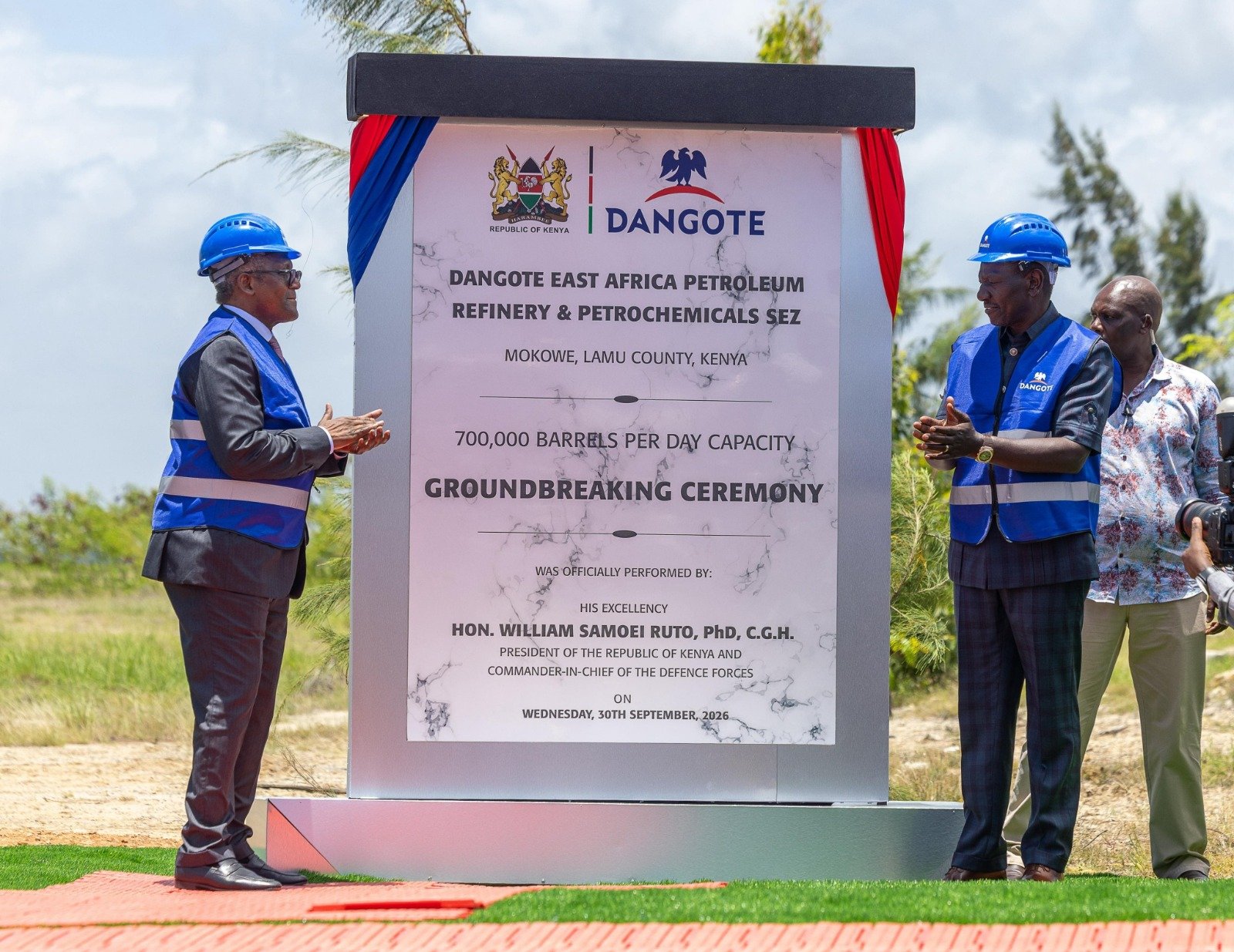

Construction has begun on a $16 billion oil refinery in Kenya’s coastal county of Lamu, a massive project that its backers say could reshape East Africa’s energy industry, reduce the region’s dependence on imported refined fuel and accelerate Africa’s push toward industrialization.
Nigerian billionaire Aliko Dangote and Kenyan President William Ruto, joined by other African leaders, broke ground on the project on Wednesday, September 30. The planned refinery is expected to process up to 700,000 barrels of crude oil per day, with construction expected to take about 40 months.
“This is Africa coming together to build Africa,” Dangote said during the groundbreaking ceremony in Lamu. “Today we are not here simply breaking ground for a refinery, we are breaking ground for a new chapter in Africa’s industrial journey to a brighter future.”
The project is modeled in part on Dangote’s massive refinery in Lagos, Nigeria, and is intended to help East Africa process more petroleum within the region rather than relying heavily on imported refined products. The Kenyan facility is also expected to include petrochemical production and a 1,000-megawatt power facility, creating a broader industrial complex along Kenya’s coast.
For East Africa, the stakes are significant. Heavy dependence on imported petroleum products exposes countries to international fuel prices, foreign-exchange pressures and disruptions in global supply chains. The Lamu refinery is intended to supply refined petroleum products to Kenya and neighboring countries while creating a new industrial hub.
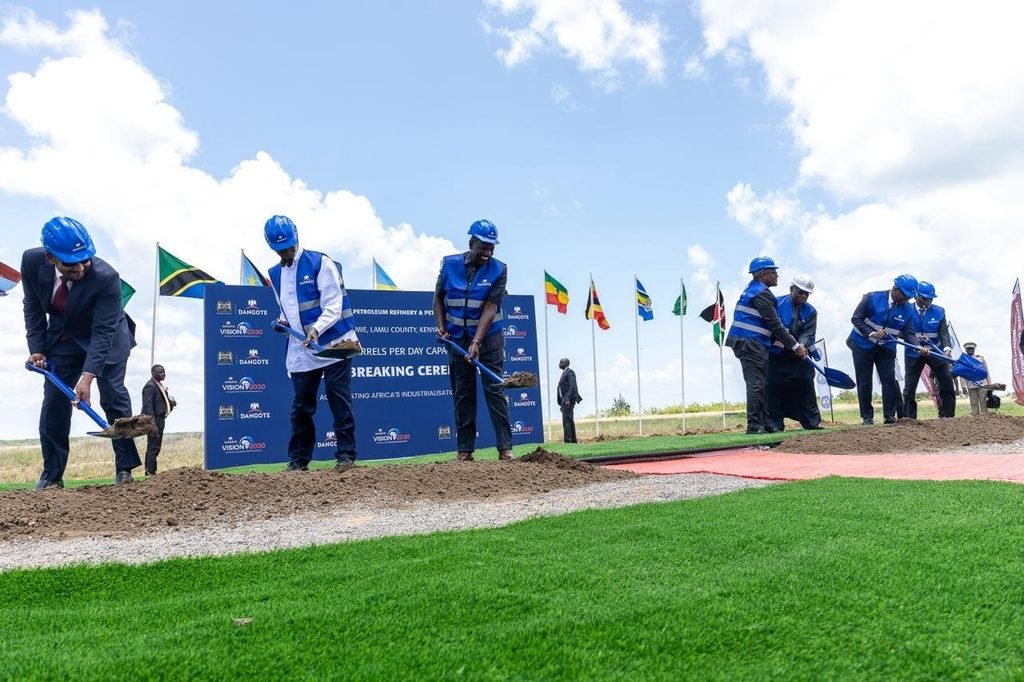
Dangote has offered regional governments a combined 30% stake in the project, giving neighboring countries a potential financial interest in the refinery and its future economic benefits.
Kenya is not currently a major commercial oil producer, however, meaning the refinery will depend on crude supplied from other producers. Uganda, which is preparing to begin commercial oil production, is expected to be among the potential sources of crude for the regional market.
Ruto has strongly backed the project, describing it as an opportunity for Kenya to strengthen its industrial capacity.
“We do not need anything for free,” Ruto said at the ceremony. “We are going to deploy our assets, and we are going to use the national infrastructure funds to invest in this refinery.”
But for some people in Lamu, the promise of economic transformation comes with serious questions about land rights, compensation and the environment.
More than 100 residents have challenged the project in court, seeking recognition of their land rights in connection with the proposed development. A Kenyan court has ordered that the status quo at the disputed site be maintained while the legal case proceeds.
Environmental organizations have also raised concerns about the potential impact of a large industrial facility on Lamu’s fragile coastal ecosystem. The concerns are particularly sensitive because Lamu Old Town is a UNESCO World Heritage site, while the surrounding coastal environment supports fishing, tourism and traditional livelihoods.
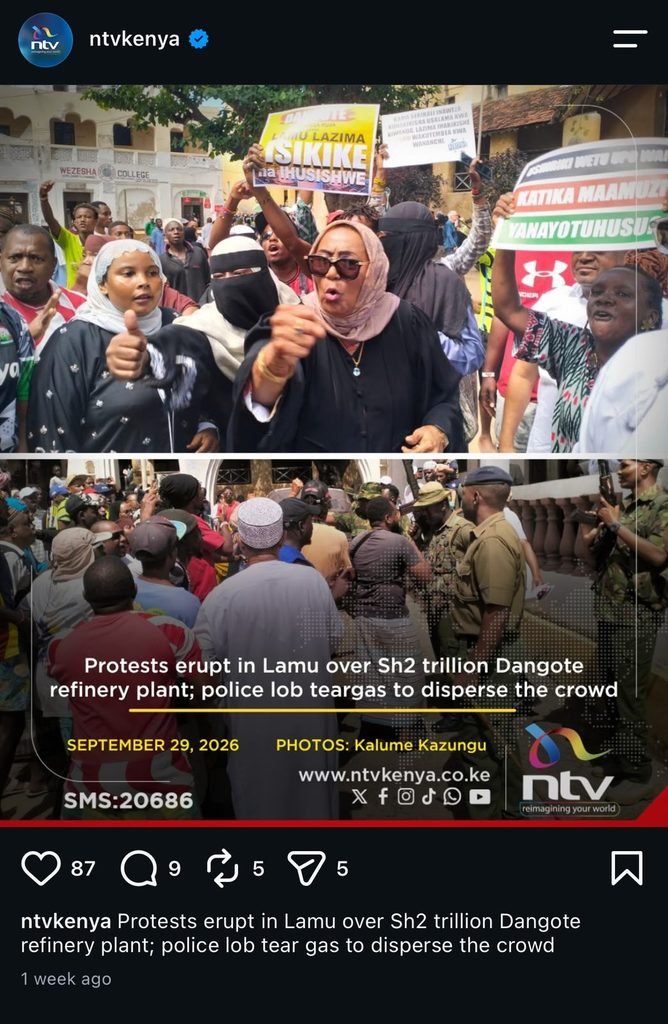
Click the photo above to read more about the protests, the refinery project and the issues raised by local communities.
Dangote has nevertheless made clear that he intends to move forward despite the legal and environmental challenges.
“This refinery that we are building in Lamu, it will get done, no matter what,” Dangote said, arguing that the ultimate objective is to create economic benefits for Kenya and the wider region.
The project is also entering an increasingly competitive East African energy market. Uganda and Tanzania announced in August a proposed energy partnership centered on Tanzania’s Port of Tanga, involving more than $20 billion in potential investment, including a proposed refinery, pipelines, storage facilities and other energy infrastructure. Uganda is also pursuing a separate refinery project in Hoima.
The debate over the Lamu refinery raises a larger question for Africa: How can the continent industrialize, create jobs and generate wealth from its natural resources without leaving local communities behind or sacrificing the environment?
For decades, many African countries have exported raw materials while importing finished products made from those same resources. Expanding refining and other forms of value-added production could help keep more investment, technology, jobs and economic value within the continent.
Ugandan President Yoweri Museveni put the problem directly during an African Union industrialization meeting: “We export raw materials for value addition and import finished goods made from those same materials.”
But industrialization cannot be measured only in barrels of oil, billions of dollars invested or the number of jobs promised. It must also be measured by whether local communities benefit, whether landowners are treated fairly and whether development protects the environment and respects the cultural heritage of places such as Lamu.
That is where the Lamu project could become a test case, not only for Kenya, but for the future of African-led development.
The debate also raises a question for Africans living outside the continent: What role can the African diaspora play in Africa’s next phase of industrialization?
The question is increasingly being discussed at the continental level. In 2026, the African Union convened a high-level dialogue on “Unlocking Diaspora Capital for Africa’s Transformation,” examining how diaspora savings, investment, professional expertise and international networks can contribute to Africa’s development.
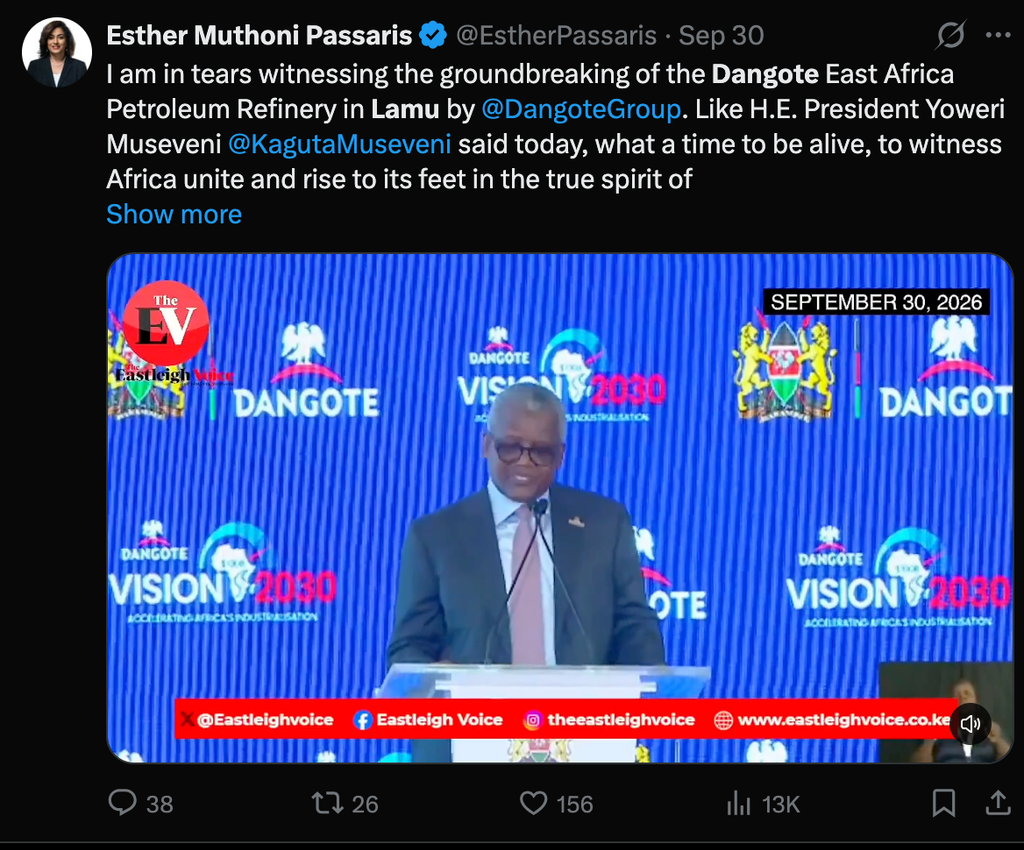
The opportunity goes beyond sending money home. The African diaspora includes entrepreneurs, engineers, scientists, financial professionals, technology experts, academics and other specialists whose knowledge and international networks can contribute to African businesses and institutions. The World Bank has also highlighted the diaspora’s potential contribution through investment, entrepreneurship, trade and mentorship.
As one participant in a United Nations Economic Commission for Africa discussion on diaspora and industrialization put it: “We have the skills… Africa has the opportunities…; we just need the collective vision to put the two together.”
The challenge is not simply to encourage Africans abroad to support every major project on the continent. It is to help build an Africa where investment and industrialization create broad-based opportunity while respecting the people, cultures and environments where development takes place.
For Lamu, that means recognizing both sides of the debate: Africa needs industrialization, but industrialization must also earn the trust of the communities it is meant to serve.
1 comment
I like this