
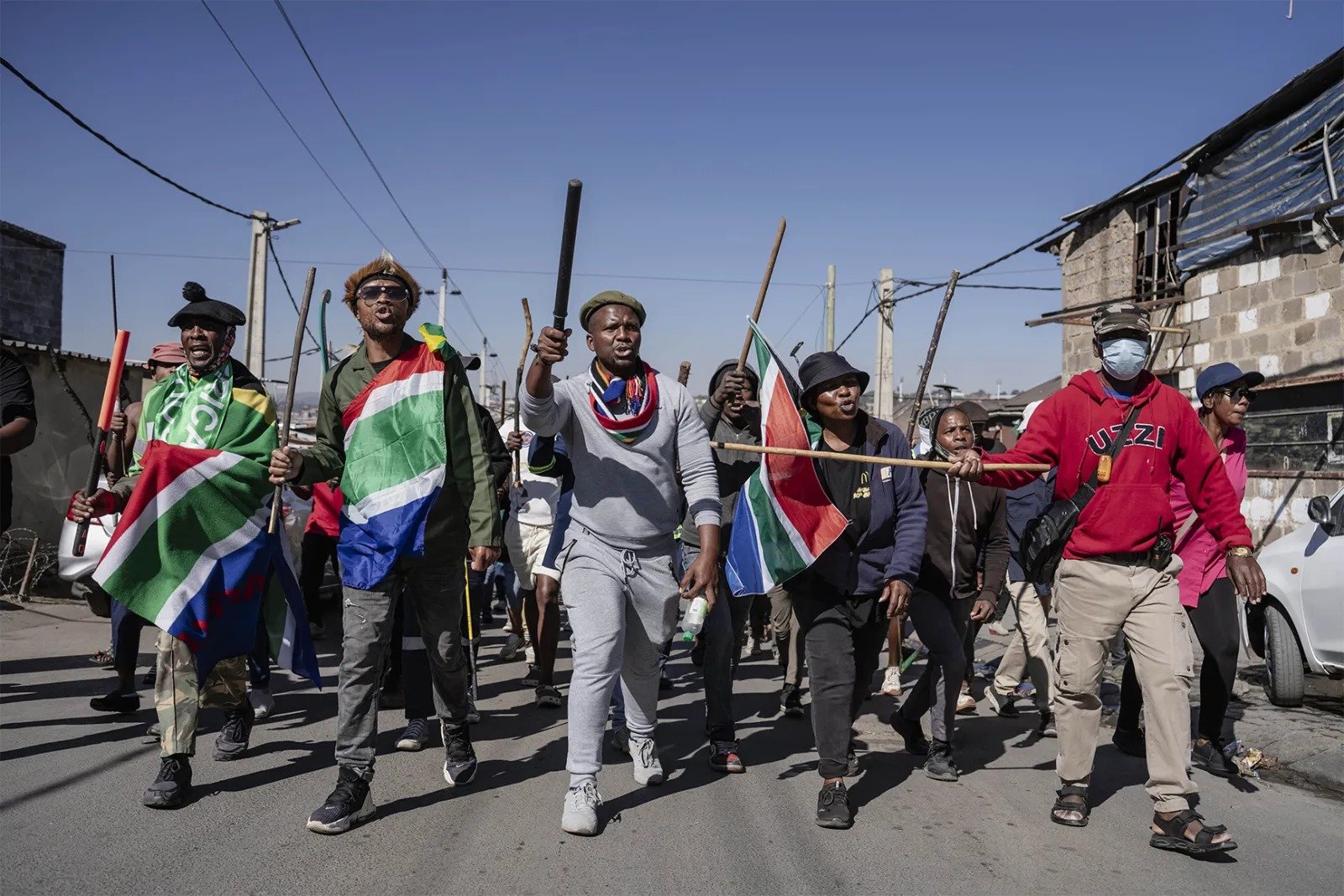

South Africa’s anti-immigrant movement has vowed to continue its campaign until undocumented migrants leave the country, even as businesses and workers grapple with the economic consequences of the exodus.
Migrant-owned small businesses have long been an important part of South Africa’s entrepreneurial landscape, providing goods and services, filling gaps in local markets, and creating employment. But hundreds of thousands of immigrants have left the country amid renewed waves of xenophobic hostility, leaving some businesses struggling to replace workers with specialized skills.
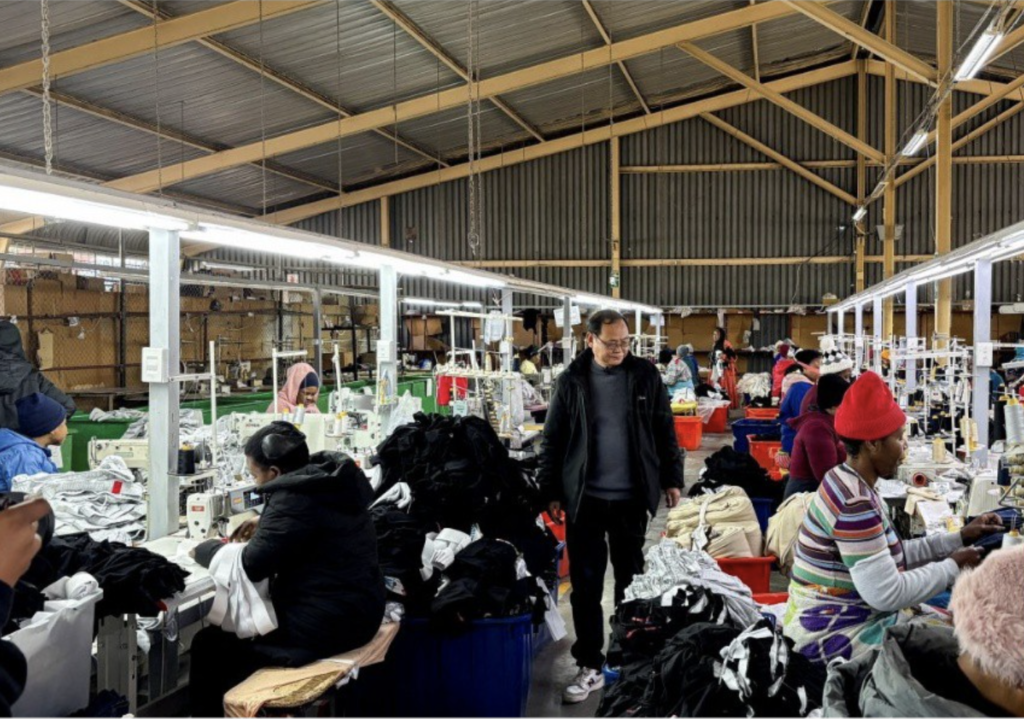
At a clothing factory in eastern South Africa, dozens of sewing machines sit idle because there are not enough workers to operate them. Many of the factory’s immigrant employees left following the recent wave of anti-immigrant sentiment.
Migrant entrepreneurs and workers play an important role in local economies, particularly in communities where large formal retailers and businesses have limited reach. They provide affordable goods and services, bring entrepreneurial skills, and fill labor shortages in sectors where employers struggle to recruit workers.“We cannot immediately replace the skills of our former employees with those of local people,” said Alex Liu, a Chinese immigrant who owns the factory. “All this takes time, and we were not prepared ahead of time. Recovering from the loss of our employees could take several years.”
The anti-immigrant campaign has contributed to the departure of at least 160,000 people, according to estimates cited by local sources. Demonstrations and attacks targeting foreigners have resulted in deaths and sparked anger across the continent. South African workers are also feeling the economic consequences as businesses lose experienced employees and face disruptions to production. Earlier this year, authorities sanctioned factories that employed undocumented immigrants, contributing to a decline in orders in some businesses.
South Africa has one of the highest unemployment rates in the world, with the national rate exceeding 30%. Yet some agricultural and industrial sectors continue to struggle to find workers with the skills they need.
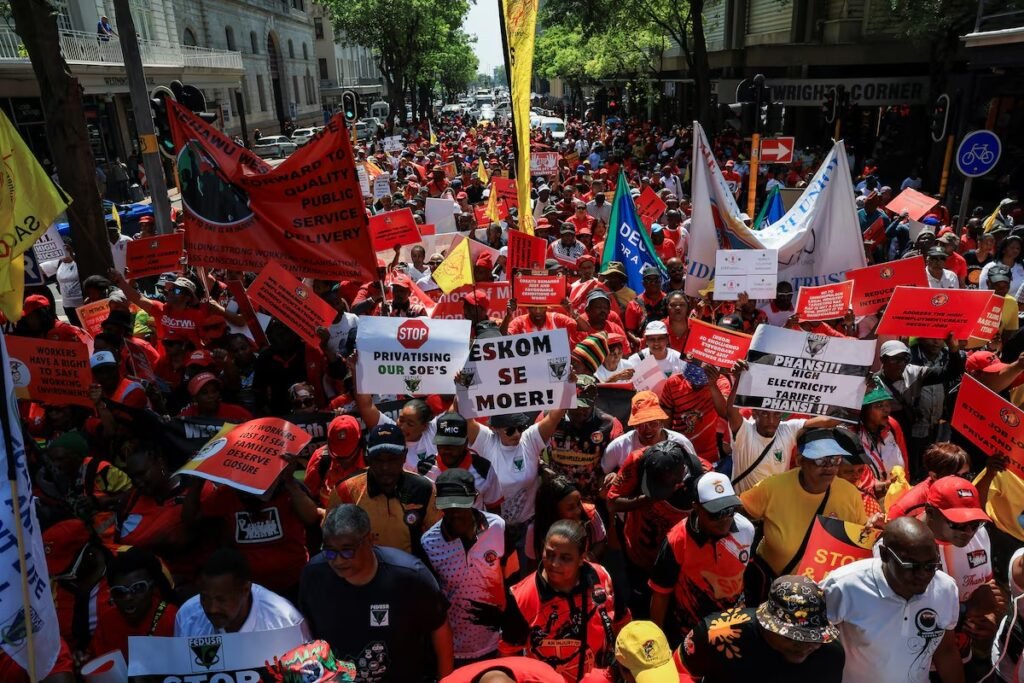
The country’s largest trade union federation, the Congress of South African Trade Unions (COSATU), has opposed xenophobic attacks while also calling on employers to comply with labor laws.
“There has been a narrative that even if all migrants left the country, it would not necessarily mean more jobs for South Africans,” said Mathew Parks, coordinator of COSATU. “We have a serious unemployment problem, so I don’t see a young person turning down a job. The companies that hire undocumented immigrants should be held accountable.”
South Africa’s unemployment crisis has persisted for decades. In the first quarter of 2026, more than 60% of young people between the ages of 15 and 24 were unemployed, while the unemployment rate among people aged 25 to 34 was about 41%.
Critics of South African businesses accuse some employers of deliberately hiring foreign workers because they can be more vulnerable to exploitation and may be less likely to demand their rights under the country’s labor laws, including the minimum wage.
Jassat Esat runs a textile factory whose workforce is largely South African, although machinist and technical positions are often filled by workers from neighboring countries.
“I fully understand the demand for us to employ locals,” Esat told The Humanitarian earlier this month. “But we employ people based on training, capabilities, and their work ethic.”
Like many business owners, Esat believes xenophobia could cause lasting economic damage. He argues that hostility toward foreign nationals risks not only isolating South Africa diplomatically from other African countries but also undermining trade relationships worth billions of dollars.
“Around 30% of our exports go to the rest of Africa. If you add informal trade, it could be 35%,” he said. “We are fighting the rest of Africa, while we are also destroying our economy.”
Blaming foreigners for South Africa’s economic problems has become an easy political message as the country struggles with high unemployment and economic growth of barely 1%.
The political fragility of the African National Congress (ANC), which governed South Africa for three decades, has also created space for populist parties to gain support by promising tougher action against undocumented immigration.
“Intellectually, xenophobia is not being contested,” Esat said. “Instead, people are looking for scapegoats. It is a tragedy.”
The debate over immigration in South Africa stands in sharp contrast to the treatment of a group of white South Africans who were offered a fast-tracked path to the United States under the Trump administration.
The administration promoted widely disputed claims of a “white genocide” against Afrikaners and established a refugee program specifically for them. The U.S. government said the program was intended to provide refuge to Afrikaners facing racial discrimination and persecution in South Africa.

But the migration has not been one-way. Some Afrikaners who traveled to the United States have since returned to South Africa, while others have chosen not to pursue relocation. Returnees have cited the high cost of living and difficulties adjusting to life in the United States, as well as family ties, citizenship, and opportunities at home.
The contrasting experiences have drawn attention to the complicated politics of migration in South Africa. While African migrants from neighboring countries continue to face hostility, discrimination, and pressure to leave, some white South Africans who were offered refuge abroad have found reasons to return.
The two experiences underscore the broader tensions surrounding migration, economic opportunity, identity, and belonging in a country where unemployment remains high and political debates over who has access to jobs continue to shape public life.