
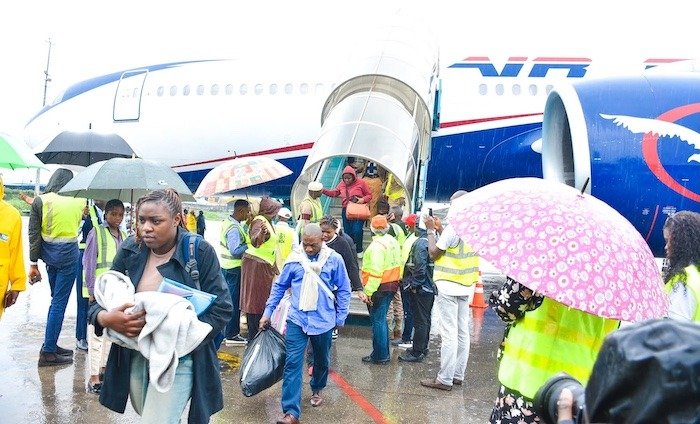

South Africa is stepping up immigration enforcement as authorities intensify efforts to remove undocumented migrants, strengthen border controls and respond to mounting tensions over migration across the country.
The government processed 86,596 foreign nationals for deportation or repatriation between June and August, 2026, Justice Minister Mmamoloko Kubayi said. The figure underscores the scale of South Africa’s latest immigration crackdown, which comes amid protests against undocumented migrants, concerns over the treatment of foreign nationals and growing pressure on the government to manage migration across its borders.
Kubayi, who chairs the Inter-Ministerial Committee on Migration, announced the figure during a briefing on the government’s migration-management efforts. She said the cases were handled through coordinated law enforcement operations.
“Between June and August this year, a total of 86,596 foreign nationals were processed for deportation and repatriation through coordinated law enforcement operations,” Kubayi said.
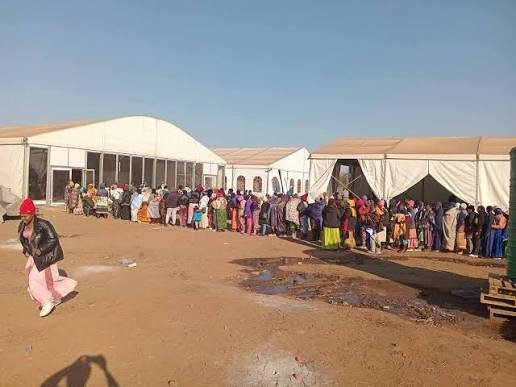
The government’s intensified enforcement comes as tensions over immigration continue to affect migrant communities and fuel debate across South Africa. In Durban, about 250 foreign nationals have been staying along Sheikh Chevalla Road near Home Affairs offices for about 15 weeks, according to information presented during the briefing.
The government has given the group an ultimatum to either be transferred to the Lindela Repatriation Centre for return to their countries of origin or be reintegrated into their communities. Members of the group have said they fear returning both to their communities in South Africa and to their home countries.
Border enforcement expands
Kubayi said Malawians accounted for the largest group among those processed for deportation and repatriation, followed by Zimbabweans and Mozambicans.
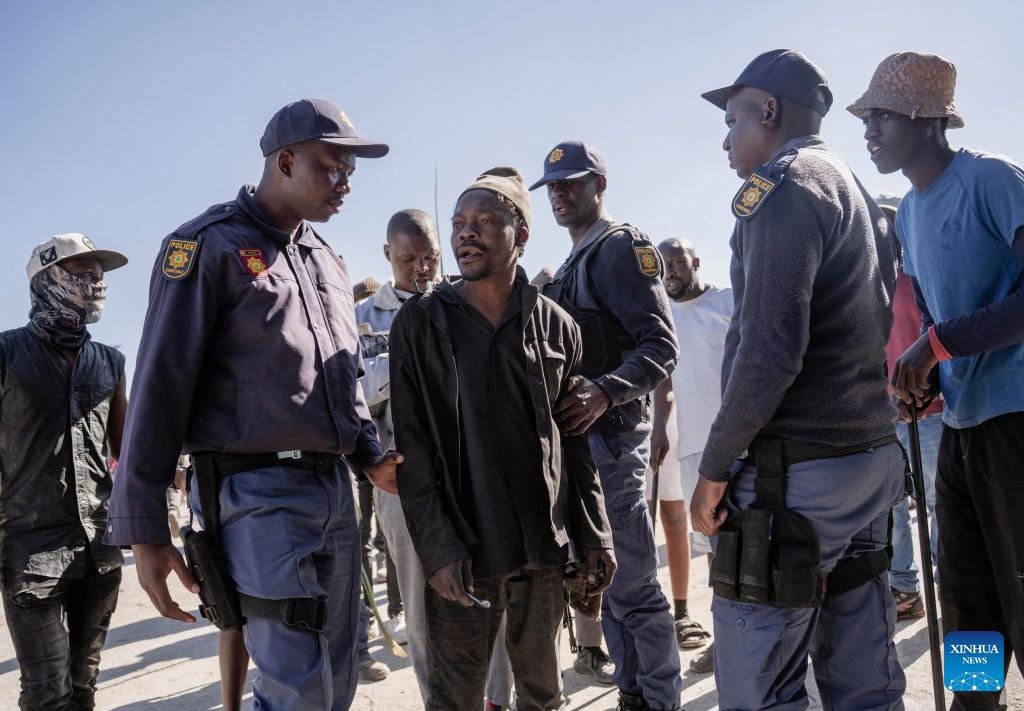
According to government data, 90% of those repatriated had entered South Africa illegally, while 95% were classified by authorities as “border jumpers.”
“Malawians continued to constitute the largest group, followed by Zimbabweans and Mozambicans,” said Kubayi. “Our data indicates that 90% of those repatriated entered the country illegally, while 95% were classified as border jumpers.”
The government is also increasing efforts to prevent people from entering South Africa outside designated ports of entry. Kubayi said more than 4,200 undocumented foreign nationals were intercepted between April and July while attempting to enter the country outside formal border posts.
Most of the interceptions occurred along the northern corridor bordering Zimbabwe, followed by areas along the borders with Lesotho and Mozambique, according to the government.
The Border Management Authority operates five drones at critical border points, including Lebombo, Maseru, Oshoek, Beitbridge and KwaZulu-Natal. The government is procuring nine additional drones and deploying about 40 body-worn cameras at critical ports of entry to improve operational oversight and help address corruption among officials.
The government has also approved a Borderline Infrastructure Improvement Plan for 2026-2030 covering all seven border provinces. The plan includes improvements to fencing, patrol mobility, surveillance and operational response in vulnerable border areas.
Anti-immigration protests add to tensions
The government’s enforcement campaign is unfolding alongside an organized anti-immigration movement that has staged protests in several parts of South Africa.
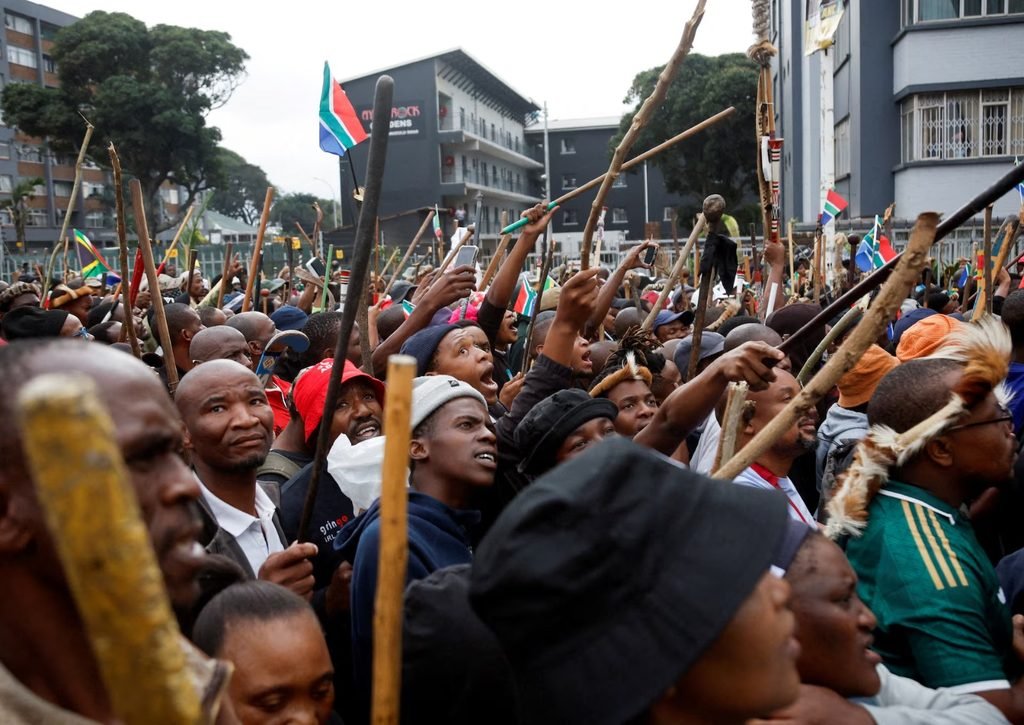
On Aug. 17, members of March and March marched in Durban as leaders of the Southern African Development Community gathered for their 46th summit. The summit was held at the Durban International Convention Centre, with migration among the regional issues discussed. SADC leaders later called for coordinated regional dialogue to address the underlying causes of migration and develop sustainable responses.
March and March called on other African governments to “fetch their people,” referring to undocumented migrants from their countries living in South Africa. The group says its campaign is about immigration enforcement and rejects accusations that its actions are xenophobic.
March and March leader Jacinta Ngobese-Zuma defended the movement’s position during the protest.
“Our memorandum is asking these governments to fetch their people. They are busy complaining about xenophobia; if we had xenophobia, they wouldn’t be here,” Ngobese-Zuma said.
The protest added another dimension to an increasingly contentious debate over immigration, with demonstrators demanding tougher action against undocumented migrants while critics have raised concerns about the treatment and safety of foreign nationals. SABC reported that organizers had expected about 3,000 participants, but roughly 200 people attended the march.
Musina center closes as repatriations decline
Meanwhile, the Temporary Repatriation Processing Centre in Musina has been shut down and decommissioned after the number of repatriations declined.
The center, established in June with a capacity of 20,000 people, processed more than 4,000 repatriations at its peak. The number fell to 58 in August, prompting the government to end operations on Aug. 21.
The government said the closure marks a return to regular immigration law-enforcement operations. The Department of Home Affairs will continue working with countries that formally request assistance in repatriating their citizens.
The closure comes as South Africa seeks to balance intensified immigration enforcement with regional cooperation. SADC leaders, while acknowledging South Africa’s update on migration governance, called for a coordinated regional approach to address the underlying causes of migration.
Regional and diaspora concerns
The heightened enforcement follows months of protests and unrest over undocumented migration, raising concerns among governments whose citizens live and work in South Africa. The developments have also drawn attention across African diaspora communities, including in North America, where South Africa’s treatment of migrants is being closely watched.
For many African immigrants and their families abroad, the issue extends beyond immigration statistics. South Africa is a major destination for migrants from across the continent, and developments there can affect regional relations, cross-border movement and perceptions of the safety of African nationals living outside their countries of birth.
The South African government has maintained that immigration management is a matter of state responsibility and that immigration laws must be enforced by authorized institutions rather than private groups or vigilantes.
As enforcement expands, the government faces the challenge of strengthening border controls and enforcing immigration laws while addressing tensions involving foreign nationals and maintaining cooperation with neighboring countries. The debate is likely to remain a regional issue as South Africa and other African governments grapple with the economic, political and humanitarian pressures driving migration across the continent.