
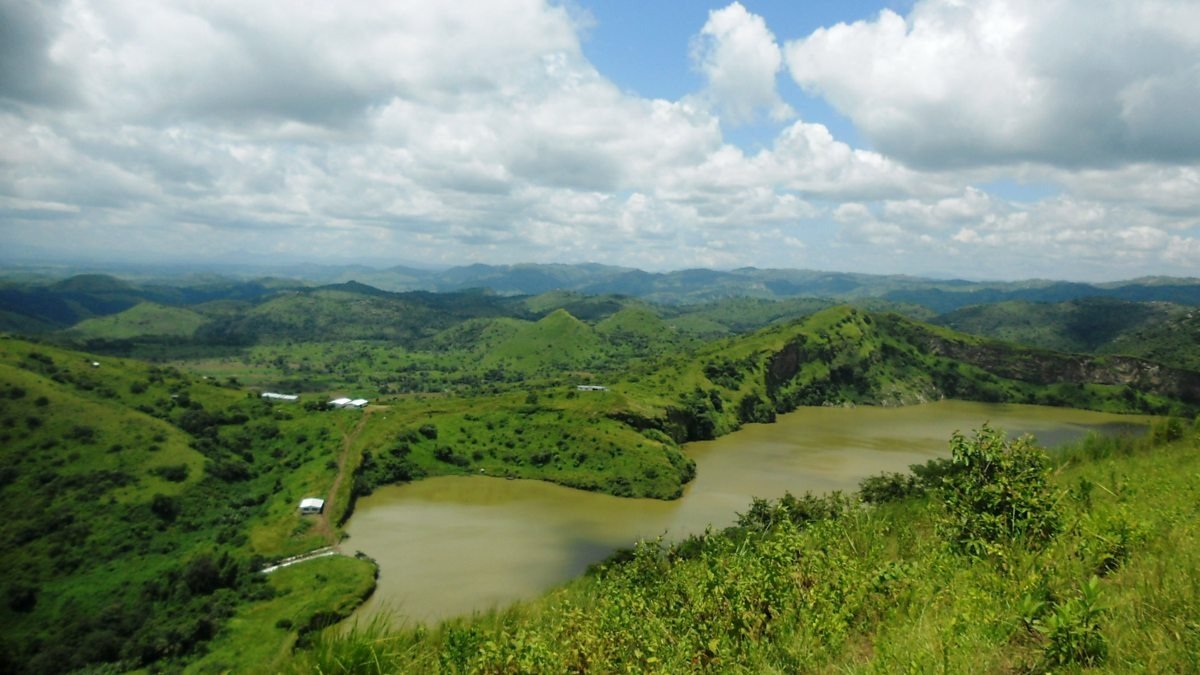

On August 21, 1986, a silent cloud of carbon dioxide escaped from the depths of Lake Nyos in northwestern Cameroon and swept through nearby villages, killing around 2,000 people. Four decades later, survivors are still living with the trauma of one of Cameroon’s deadliest natural disasters.
The village of Nyos was peaceful that evening. Residents went about their daily routines, unaware that a disaster was unfolding beneath the surface of the lake nearby.
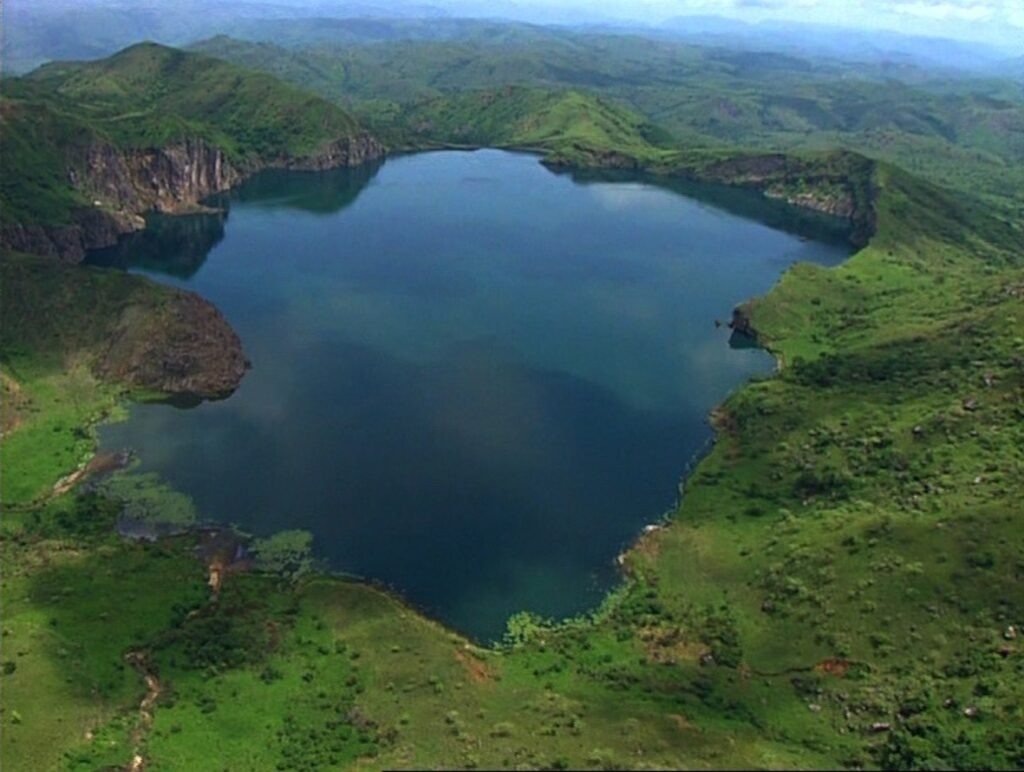
Lake Nyos sits inside an ancient volcanic crater, about 690 feet deep and more than 3,500 feet above sea level. Its waters had long been a familiar part of the landscape and a local tourist attraction. No one expected the lake to become the source of a catastrophe that would devastate the surrounding communities.
“I only remember that it was the next day when I saw people lying on the ground,” said Monica Ngong, a survivor of the Nyos disaster. “There were 56 of us in our compound, but 54 of them were killed. Everywhere I went, I saw dead bodies; people, animals, even birds. They were lying everywhere. It was horrible.”
That night, witnesses reported hearing a sound resembling a landslide. Scientists believe a sudden disturbance beneath the lake triggered the release of carbon dioxide trapped in its deep waters. The gas-rich water rose rapidly to the surface, releasing a massive cloud of carbon dioxide.
Carbon dioxide is heavier than air, the gas flowed downhill through nearby valleys, spreading rapidly across the surrounding communities. As it moved, it displaced the oxygen in the air.
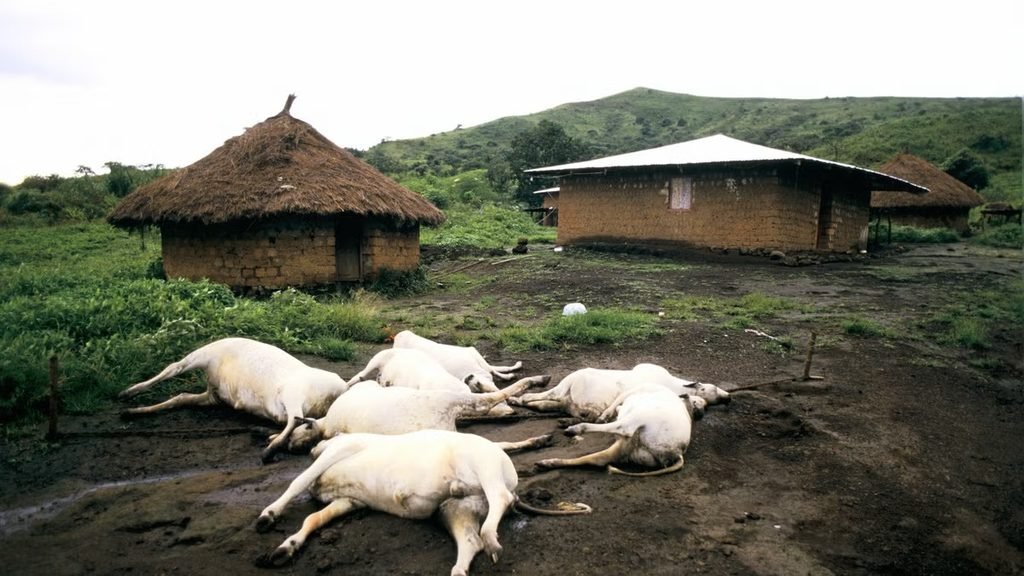
Sleeping villagers and animals lost consciousness and died within seconds. Hundreds of victims were recorded in the villages of Nyos, Subum and Cha. The following day, survivors who had been on higher ground awoke to scenes of death and devastation.
“The Lake Nyos disaster took everybody by surprise. We had no warning signals before it ever took place,” said Isaac Konfor, a Cameroonian geologist and head of a laboratory in the Department of Earth Sciences at the University of Yaoundé, in an interview with German broadcaster Deutsche Welle.
Like Ngong, Ful Elijah Sayong was among those who survived that tragic night.
“To my great surprise, I found myself outside, snoring. I didn’t know what had happened; it was as if we were drunk,” said Sayong, a survivor and former employee of the Wum Area Development Authority. “When my wife woke up, she came to help me up and told me that our child was lying dead on the bed.”
Scientists often compare Lake Nyos to a giant bottle of carbonated water. For decades, carbon dioxide accumulated in the lake’s deep waters. When the lake was disturbed, the gas was suddenly released in a rapid chain reaction, producing a deadly cloud that spread through nearby communities.
The disaster claimed the lives of 1,746 people and approximately 3,500 livestock, making it one of the deadliest natural disasters in Cameroon’s history.
Carbon dioxide is harmless at normal atmospheric concentrations. But at high concentrations, it can act as an asphyxiant by displacing oxygen.
Forty years after the disaster, residents are still struggling to rebuild their lives and communities.
“Now we’re seeing the same thing with certain grasses here,” survivor Buba Hasan told French broadcaster TV5. “When animals eat the leaves and grass growing around them, they begin to develop health problems, including bloody urine and bloody stools. Eventually, the animals can die.”
In August 1986, President Paul Biya administration issued a decree banning habitation in the Nyos Valley. Despite the restriction, some residents have gradually returned to the area over the years.
Lake Nyos has since become a global case study in the study of volcanic lakes and gas-related natural disasters. Research in Cameroon has also helped scientists better understand other lakes with similar characteristics, including Lake Monoun in Cameroon and Lake Kivu, which lies between the Democratic Republic of Congo and Rwanda.
1 comment
Very good