
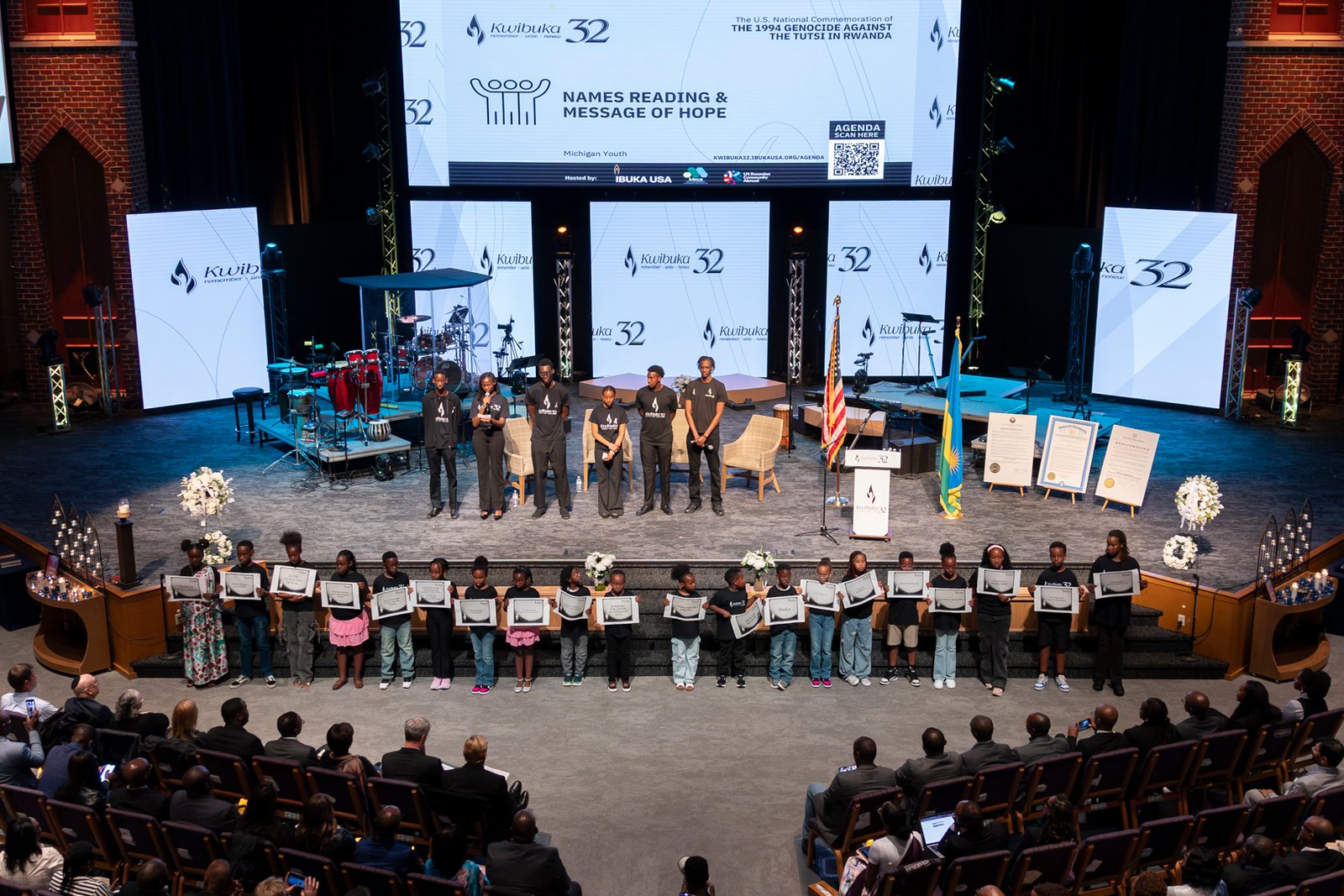

The 32nd commemoration of the 1994 Genocide against the Tutsi in Rwanda was held in Kentwood, Michigan, over Memorial Day weekend. The event was marked by a proclamation recognizing April 7 each year as the International Day of Reflection on the 1994 Genocide against the Tutsi in Rwanda.
Some few U.S. states, cities, and counties have officially recognized the atrocities committed in 1994 as the “Genocide against the Tutsi.” These local and state governments have adopted this terminology to align with the official United Nations designation and to counter genocide denial.
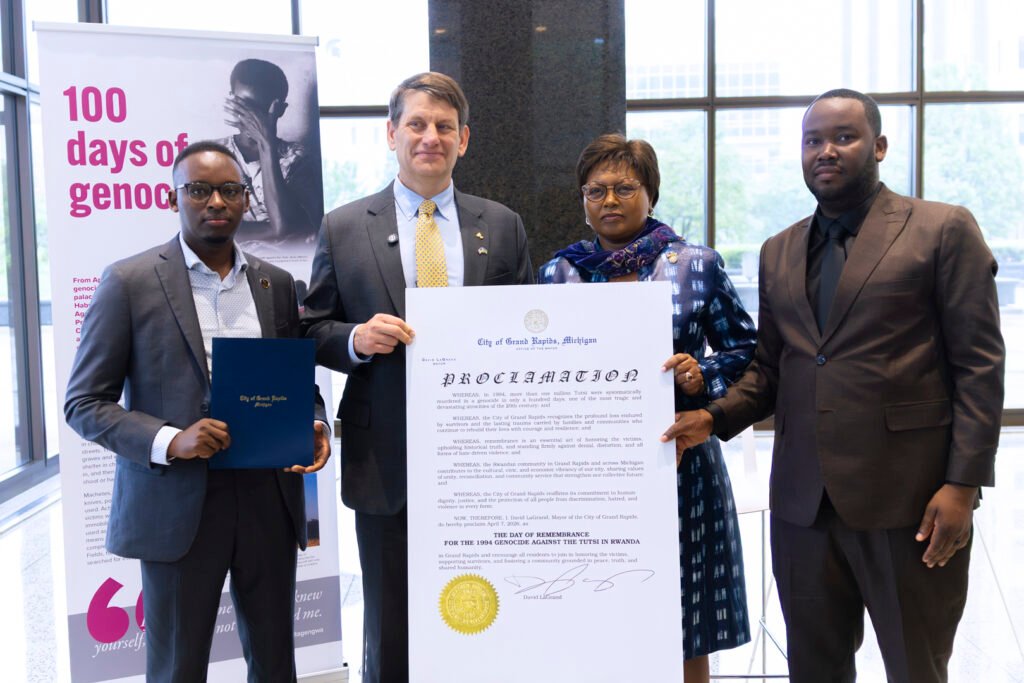
Following similar proclamations by the cities of Grand Rapids and Kentwood, Michigan Governor Gretchen Whitmer formally proclaimed April 7 as the “1994 Genocide Against the Tutsi in Rwanda Remembrance Day” throughout the state.
The event, which brought together members of the Rwandan community from across North America and Europe, took place on May 23 and 24 in Kentwood and drew more than 1,200 attendees, including survivors, government officials, and diplomats. During the commemoration, the mayors of Grand Rapids and Kentwood officially proclaimed April 7 as a day of remembrance for the 1994 Genocide against the Tutsi in Rwanda.
Official U.S. rhetoric has increasingly shifted toward using the specific term “Genocide against the Tutsi” in diplomatic remarks. Historically, the U.S. government was reluctant to use this designation, initially avoiding the term “genocide” in 1994 and later preferring broader terms such as “the Rwandan genocide.”
“You may know this, or you may not know this, but the world has come to the city of Kentwood,” said Stephen Kepley, Mayor of Kentwood. He noted that less than a mile from where the event took place is East Kentwood High School, one of the most diverse schools in the nation, representing students from 105 countries who speak 117 languages. The school is ranked among the top five most diverse schools in the United States.
“How did all these people get here?” Mayor Kepley asked. “Well, it’s good news and bad news. The bad news is because of wars, genocide in places like Rwanda, Bosnia, Sudan, and elsewhere. The good news is that they became my friends, my brothers and sisters, and we are a new growing family and community in Kentwood.”
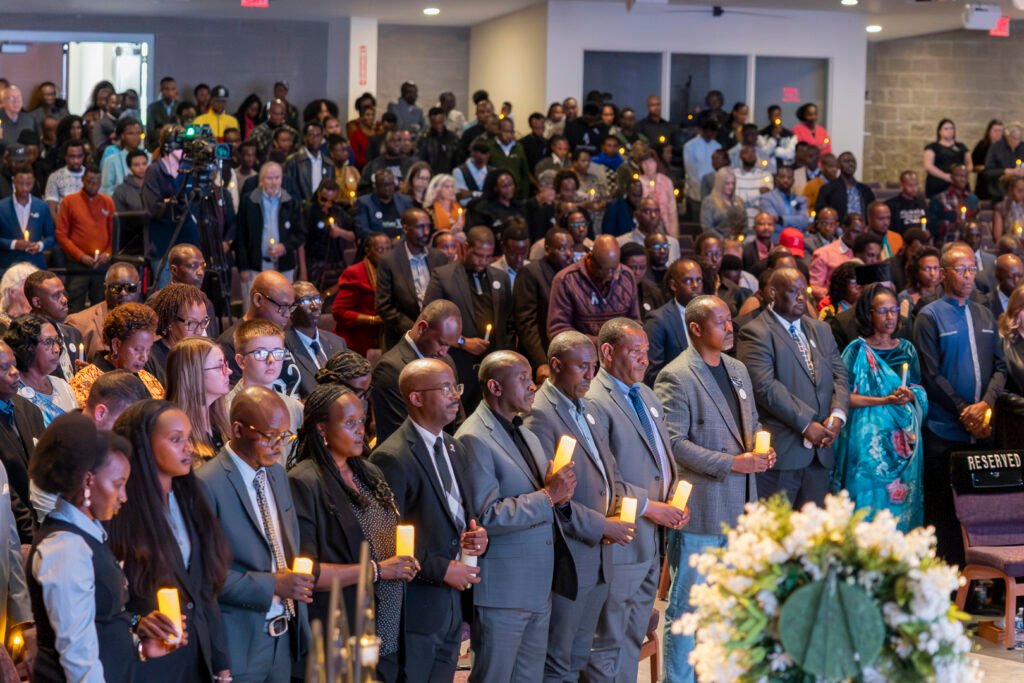
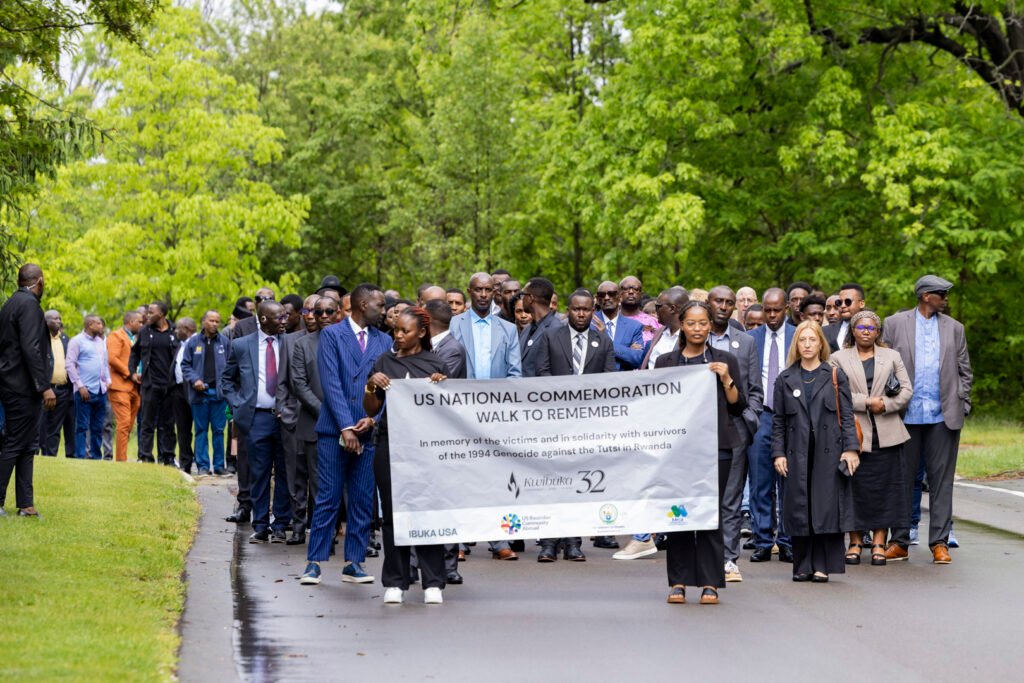
The event was organized by the Rwandan Community in the State of Michigan and the nationwide IBUKA association in the United States. Activities included a survivors’ reunion, a night vigil, a Walk to Remember, the national commemoration ceremony, and the presentation of state and city proclamations.
During the event, survivors of the genocide shared their stories and met with mental health professionals to discuss life after surviving genocide.
“This will help us better understand that our mental health challenges should not be considered a burden during our immigration process,” said Caleb Joseph Uwagaba, president of the Rwandan Community in the State of Michigan. “It also helps us understand how we can continue contributing to the development of both our countries and our new communities as well.”
Thirty-two years after the genocide, many survivors continue to face significant challenges, particularly when sharing stories about what happened to them during one of the most tragic atrocities of the late 20th century. Many are still living with trauma and continue the long process of healing and recovery.
Reverien Rerangwa, a genocide survivor who testified during the commemoration ceremony, described the horrific experiences he endured during the 1994 Genocide against the Tutsi.
During the genocide, he lost his left eye and left arm and suffered severe injuries throughout his body. He was only 15 years old at the time. He also lost 43 family members. Despite his suffering, he said he will never stop sharing his story, especially with those who did not witness the genocide firsthand.
In her remarks, Rwanda’s Ambassador to the United States, Mathilde Mukantabana, offered comfort to survivors and reminded the Rwandan community and friends of Rwanda that reconciliation comes at a cost.
“We had to ask the survivors to do the impossible in order to restore our nation, to live together again with those whom they saw with their own eyes murdering their loved ones,” Ambassador Mukantabana said. “We couldn’t ask anything else from the perpetrators. Only survivors had something left to give, and what was left for them to give was forgiveness.”
The ambassador encouraged the Rwandan community to remain strong and hopeful, emphasizing that Rwanda is now one family, united not only by its history but also by love, memory, and an unbreakable commitment to one another.
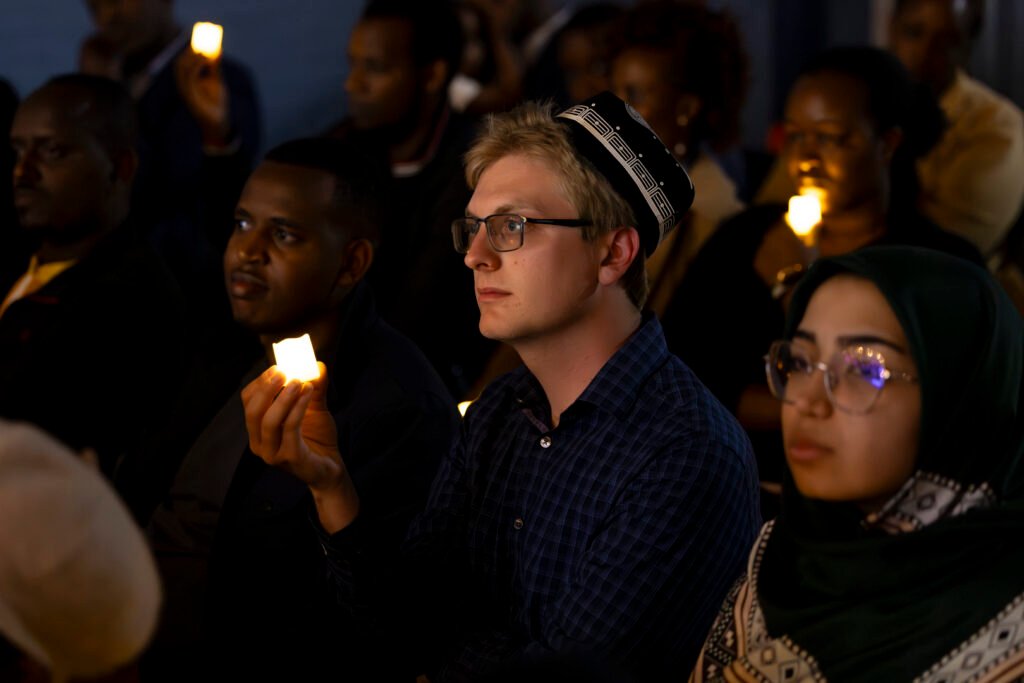
Both Ambassador Mukantabana and Mayor Kepley stressed that forgiveness can help heal wounds, anger, pain, depression, and trauma, even though it is a process that requires courage and resilience.
“I asked one of my friends who saw his family members being killed how he continues to live after all these tragedies,” Mayor Kepley said. “He told me, ‘It’s about forgiveness. I have forgiven them.’ To me, that is a miracle. How in the world can you do that? Well, I believe in miracles. I am a follower of Jesus, and I believe in the one who can remove those burdens.”
Ambassador Mukantabana reminded attendees that Kwibuka is not only about remembering the past but also about shaping the future.
“Once in our past, the whole nation looked like a dead nation, but there was one tiny light left, and that light is what is driving our country right now,” she said.
She emphasized that Kwibuka should not be viewed solely as a Rwandan story but as a lesson for all humanity. Genocide prevention, she said, requires a commitment from everyone.
For many Michiganders and members of the North American community who were unfamiliar with the history of the 1994 Genocide against the Tutsi in Rwanda, the event provided an opportunity to learn about the past and reflect on how they can help prevent similar atrocities from occurring elsewhere in the world. Each session offered important lessons drawn from the experiences of survivors.
While the proclamations may appear ceremonial to some, they carried profound meaning for survivors. For many, they represented official recognition of their suffering and an acknowledgment of the lives lost during the genocide. Survivors said that although the world once abandoned them, public recognition today helps them feel seen, supported, and remembered.