
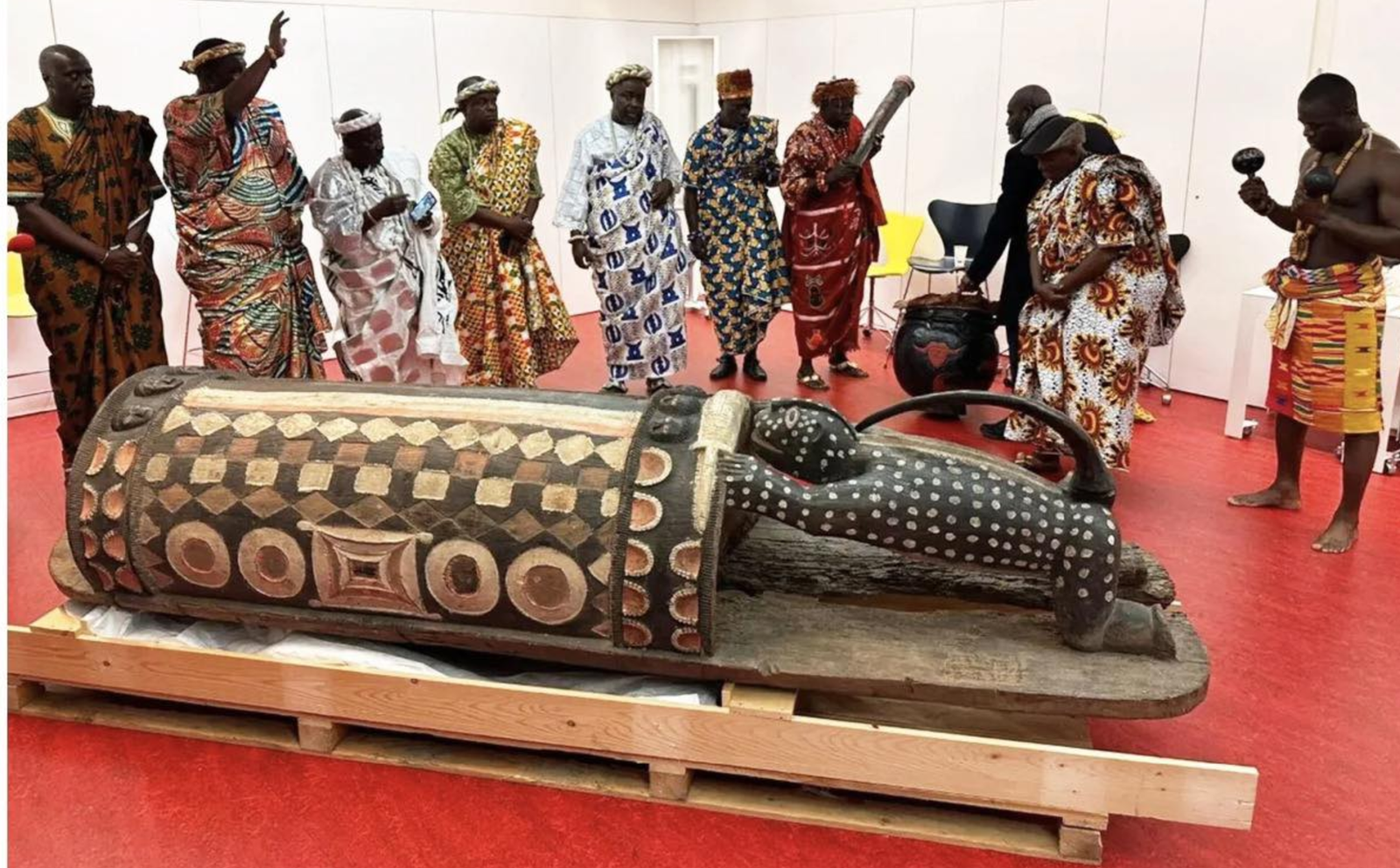

In a symbolic act of cultural restitution, France has returned the sacred talking drum known as Djidji Ayôkwé to Côte d’Ivoire, more than a century after it was seized during the colonial era.
The drum was welcomed back during a ceremony in Abidjan on March 13, 2026, ending 110 years of separation from one of the most important cultural artifacts of the country’s heritage.
For generations, the Djidji Ayôkwé was far more than a musical instrument for communities among the Atchan people, also known locally as the Atcha. The large wooden talking drum served as a powerful communication tool and a centerpiece of social and spiritual life. Its rhythms summoned villagers for ceremonies, relayed urgent news, and helped maintain connections between distant settlements.
For many Ivorians, its return carries deep emotional and historical significance.
“This object carries within it the entire memory of our society,” said Paulin Claude Danho, a representative of the Atcha community. “It brings our people together and protects them. It is more than an instrument. It allows us to reconnect with our past and rebuild.”
The drum also played a critical role in the community’s resistance during the colonial period. According to historians and Ivorian officials, French colonial troops seized the instrument in 1916 after discovering it had been used to warn villages about forced labor raids imposed under colonial rule.
“After imposing forced labor, the colonial governor tried to enter villages, particularly Atcha villages, to exploit the community’s labor,” said Françoise Remarck, Côte d’Ivoire’s minister of culture and Francophonie. “But when he arrived, he found the villages empty. The talking drum had alerted the community, allowing people to hide and avoid being taken for labor. Once the authorities realized this, they confiscated the drum.”
Following its seizure, the artifact was transported to France. By 1929 it had entered the collection of the Musée de l’Homme in Paris, before later being transferred in 2006 to the Quai Branly – Jacques Chirac Museum, which houses large collections of non-European art.
The drum itself is monumental: more than three meters (about 10 feet) long and weighing roughly 430 kilograms (950 pounds). Its four painted colors represent the four founding villages of the Atchan patriarchate. Historically, it was used to transmit messages across communities—sometimes to mobilize villagers for ceremonies, and at times to coordinate resistance against colonial authorities.
Its return comes amid a broader international debate over artifacts taken from Africa and other regions during the colonial period. Many of these objects remain in Western museums, where they were often displayed far from the communities that created them.
In 2017, Emmanuel Macron, president of France, pledged to accelerate the return of African cultural heritage held in French collections. In a major step in 2021, France returned 26 royal treasures taken from the historic Kingdom of Abomey to Benin.

For Côte d’Ivoire, the return of the Djidji Ayôkwé represents only part of a larger effort to reclaim cultural heritage lost during colonial rule.
Speaking during a handover ceremony in Paris last month, Remarck noted that the drum is one of 149 artifacts formally requested by Côte d’Ivoire in 2018.
“It has taken six years of discussions to secure this restitution,” she said. “Now 148 artifacts remain, and we hope they will not require such a long process before they can also be returned home.”
Beyond diplomacy, the drum’s return carries a deeper meaning for many Ivorians. After more than a century of absence, the instrument that once carried messages across villages now stands as a symbol of cultural memory and historical justice.
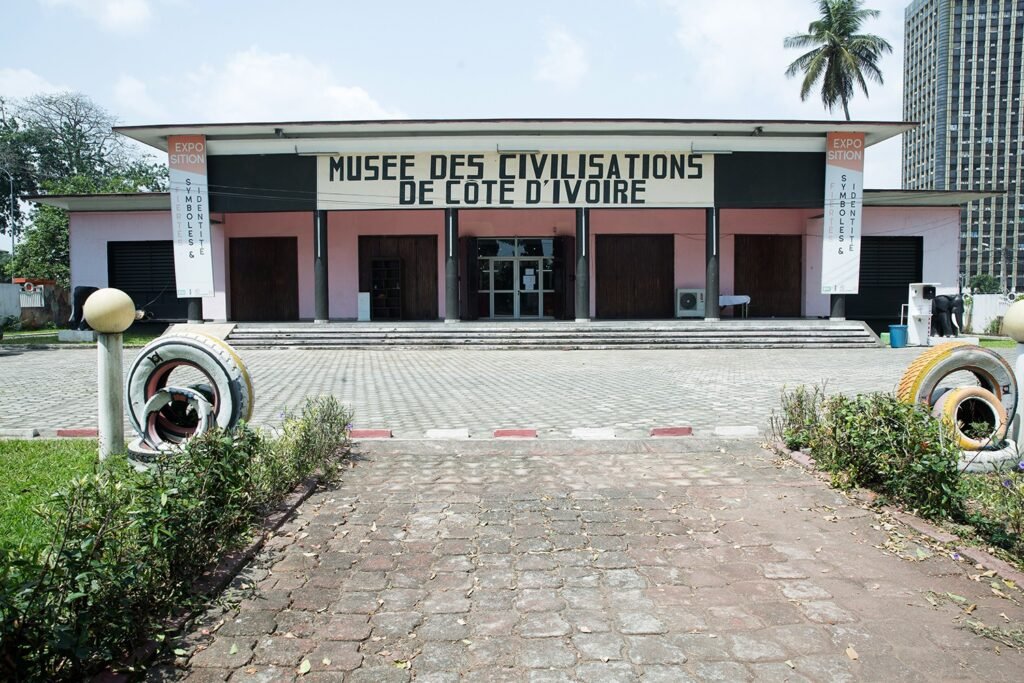
The Djidji Ayôkwé will now be housed at the Museum of Civilizations of Côte d’Ivoire in Abidjan, where it will once again be connected to the land and communities from which it was taken.